


In the realm of pharmaceutical, food, and consumer goods packaging, blister packing machines play a pivotal role. They offer a reliable and efficient way to package products, ensuring their safety, integrity, and visibility. When considering the purchase of a blister packing machine, one of the most crucial decisions is whether to opt for a single - station or a multi - station machine. As a seasoned blister packing machine supplier, I've witnessed firsthand the unique advantages and limitations of each type, and I'm here to share my insights to help you make an informed choice.
Understanding Single - Station Blister Packing Machines
Single - station blister packing machines are the more basic and straightforward option in the blister packing world. As the name suggests, these machines perform all the blister packing operations—such as forming the blister, filling the product, and sealing the blister—at a single workstation.
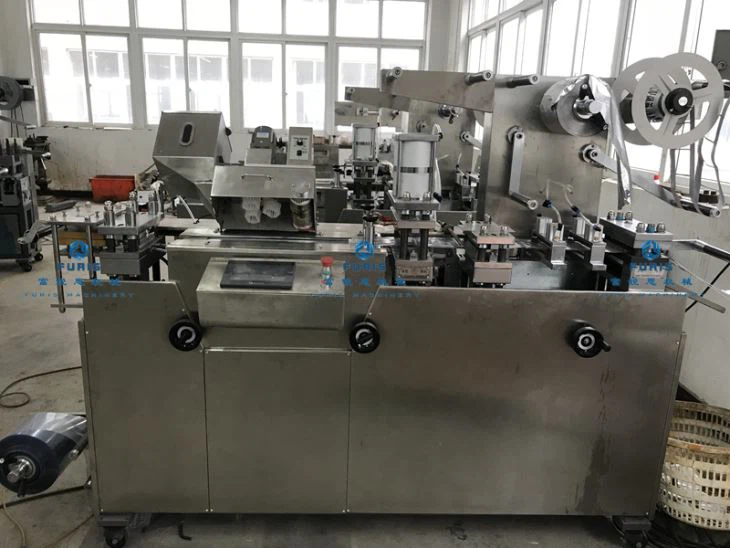

One of the primary advantages of single - station machines is their simplicity. They are relatively easy to operate and maintain, making them an ideal choice for small - scale production or businesses with limited technical expertise. For instance, a startup pharmaceutical company that is just beginning to produce a small range of pills may find a single - station machine like the Small Blister Packing Machine to be a cost - effective solution. It allows them to get their products on the market without investing in a complex and expensive multi - station setup.
Another benefit is their flexibility. Single - station machines can be quickly reconfigured to accommodate different product sizes and shapes. This is particularly useful for companies that produce a variety of products in small batches. For example, a food company that packages different types of candies or snacks can easily switch between different blister sizes and designs on a single - station machine.
However, single - station machines also have their drawbacks. The most significant limitation is their productivity. Since all operations are performed at a single station, the machine has to complete one cycle before starting the next. This results in a relatively slow production speed, which may not be sufficient for large - scale manufacturing. Additionally, the single - step nature of the process can lead to longer downtime if there is a problem with any part of the operation.
Exploring Multi - Station Blister Packing Machines
Multi - station blister packing machines, on the other hand, are designed for high - volume production. These machines divide the blister packing process into multiple stations, with each station performing a specific task simultaneously. For example, one station may be responsible for forming the blister, another for filling the product, and a third for sealing.
The key advantage of multi - station machines is their high productivity. By performing multiple operations simultaneously, these machines can produce a large number of blister packs in a short period. This makes them the preferred choice for large pharmaceutical companies, food manufacturers, and consumer goods producers that require high - speed production to meet market demand. For example, a large - scale pharmaceutical manufacturer may opt for an Automatic Alu Alu Pvc Alu Blister Packing Machine For Pharma Field to package millions of pills per day.
Multi - station machines also offer better quality control. Since each station is dedicated to a specific task, it is easier to monitor and adjust the process at each stage. This results in more consistent and reliable blister packs, reducing the likelihood of product defects.
However, multi - station machines come with their own set of challenges. They are more complex and expensive to purchase, install, and maintain. They require a higher level of technical expertise to operate, and any breakdown can be more difficult and costly to repair. Additionally, they are less flexible than single - station machines, as reconfiguring them to accommodate different product sizes and shapes can be a time - consuming and expensive process.
Productivity Comparison
When comparing the productivity of single - station and multi - station blister packing machines, several factors need to be considered.
Production Speed: As mentioned earlier, multi - station machines have a clear advantage in terms of production speed. They can produce blister packs at a much faster rate than single - station machines, making them suitable for large - scale production. For example, a multi - station machine can produce several hundred blister packs per minute, while a single - station machine may only be able to produce a few dozen.
Changeover Time: Single - station machines have a shorter changeover time compared to multi - station machines. Since they are more flexible and easier to reconfigure, it takes less time to switch between different product sizes and shapes. This can be an important factor for companies that produce a variety of products in small batches.
Downtime: Multi - station machines are generally more reliable and have less downtime due to their modular design. If one station malfunctions, the other stations can continue to operate, minimizing the impact on production. In contrast, a single - station machine has to stop completely if there is a problem with any part of the operation.
Making the Right Choice
The decision between a single - station and a multi - station blister packing machine ultimately depends on your specific production requirements. If you are a small - scale producer with limited production volume, a single - station machine like the DPB - 260 Blister Packing Machine for Pill Tablet Capsule may be the best option. It offers simplicity, flexibility, and cost - effectiveness.
On the other hand, if you are a large - scale manufacturer with high production volume and a need for consistent quality, a multi - station machine is likely to be more suitable. It can provide the high - speed production and quality control that you need to meet market demand.
As a blister packing machine supplier, I understand that choosing the right machine is a critical decision for your business. I'm here to help you evaluate your options and find the machine that best fits your needs. Whether you need a single - station machine for small - scale production or a multi - station machine for large - scale manufacturing, I can provide you with the information and support you need to make an informed choice.
If you're interested in learning more about our blister packing machines or would like to discuss your specific requirements, please don't hesitate to get in touch. We're committed to providing you with the best solutions for your packaging needs.
References
- Packaging Machinery Manufacturers Institute. (2023). Guide to Blister Packing Machines.
- Pharmaceutical Technology. (2022). Trends in Blister Packing for the Pharmaceutical Industry.
- Food Packaging World. (2021). Advancements in Blister Packing for Food Products.